Burkina Faso Issues International Warrants for Exiled Journalists and Activists
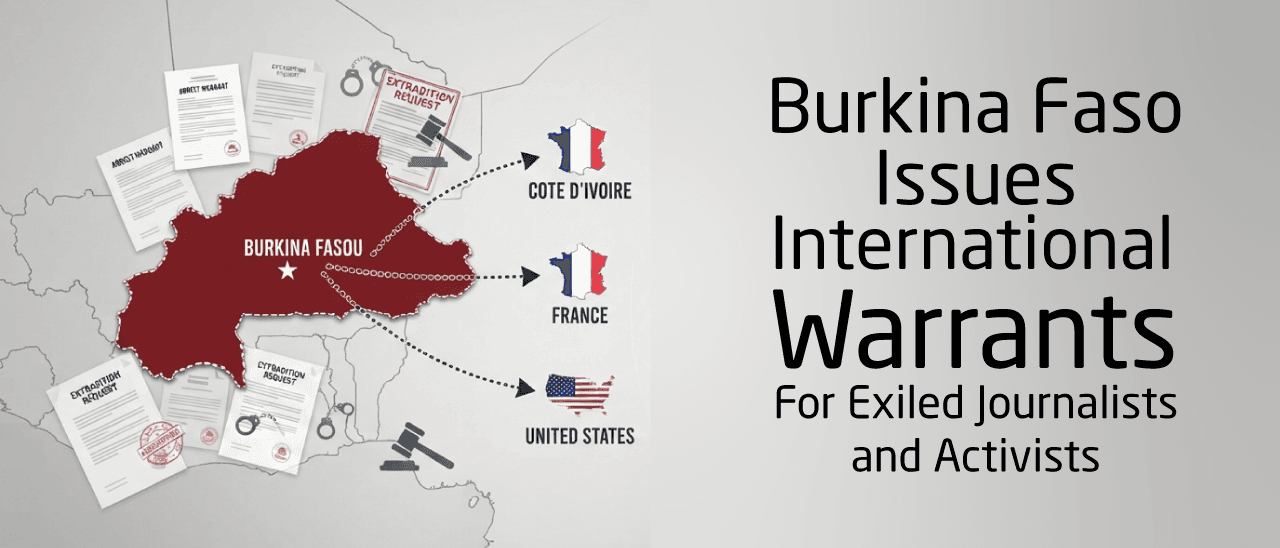
Burkina Faso’s military junta has issued international arrest warrants and formal extradition requests targeting journalists, activists, former government officials and opposition figures, prompting human rights organisations to warn that the government is extending its crackdown beyond the country’s borders.
On 13 November 2026, Prosecutor General Pinguedewindé Désiré Sawadogo announced that more than six cases had been opened by a special judicial unit responsible for prosecuting terrorism-related offences. The proceedings involve more than 45 individuals and legal entities accused of various offences, including complicity in terrorist activities, financing terrorism and glorifying terrorism.
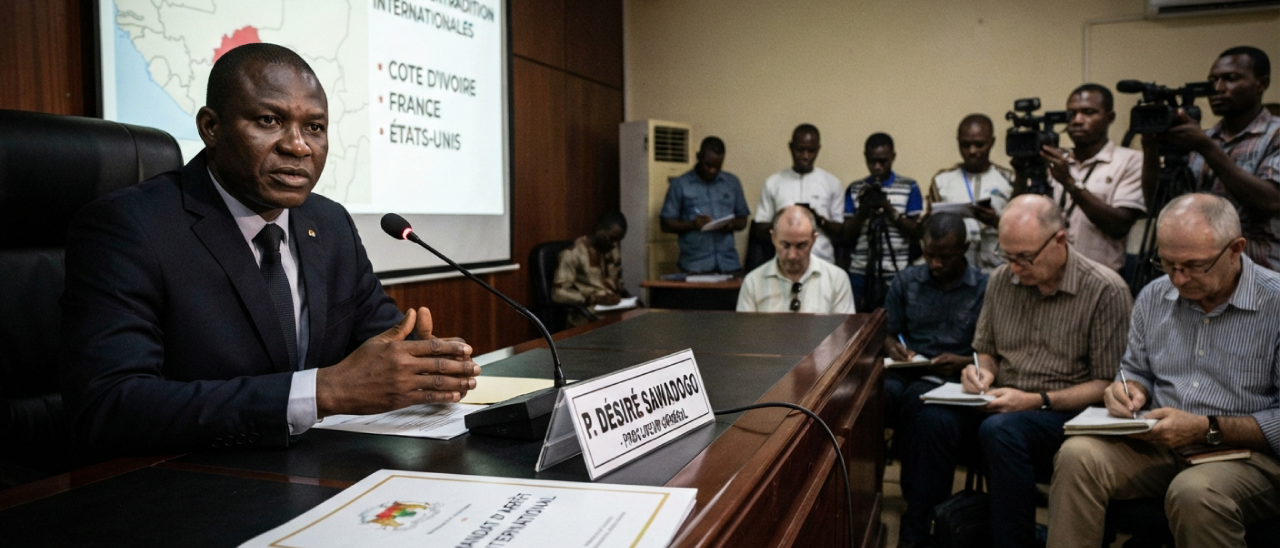
During the briefing, Sawadogo disclosed that 14 international arrest warrants accompanied by extradition requests had been issued, alongside seven additional domestic arrest warrants. Requests for extradition and international judicial assistance had been sent to Côte d’Ivoire, France, the United States and other countries. The prosecutor also revealed that Burkina Faso had asked US judicial authorities to approach Meta Platforms, the parent company of Facebook, to identify the administrators of several Facebook pages accused of promoting terrorism and facilitate legal action against them.
Those targeted include former government officials, military officers, activists and journalists. Among the journalists named are Newton Ahmed Barry, Issaka Lingani and Inoussa Ouédraogo. Former ministers Djibril Bassolé and Mamadou Alpha Barry are also among those facing international arrest warrants and extradition requests. International journalist Wassim Nasr, who works for France 24, is among the more than 45 individuals and legal entities named in the broader judicial investigation alongside France 24 and some of its commentators, rather than confirmed as one of the seven domestic arrest warrants. The broadcaster itself has not been reported to have an international arrest warrant.
The allegations against those targeted include complicity in terrorist criminal associations, financing terrorism, glorification of terrorism and the distribution of images and videos allegedly carrying terrorist connotations. Prosecutors have also cited defamation, attempts to undermine the morale of the national armed forces, contempt for public authority and incitement to rebellion. According to Sawadogo, investigations have uncovered evidence suggesting that some individuals maintained links with terrorist groups, contributed to their financing or disseminated content promoting their activities. However, the specific allegations vary from one case to another, and the authorities have not publicly provided detailed evidence linking each journalist to the alleged offences.
Advertisements
Human Rights Watch (HRW) condemned the international warrants as “a direct assault on freedom of expression”, arguing that they extend the junta’s crackdown to critics who sought protection abroad. Ilaria Allegrozzi, HRW’s senior Sahel researcher, said that placing exiled journalists on a terrorist list “is a blatant attempt to intimidate them and could have a chilling effect on their work”. HRW warned that those targeted could face arrest, forced return and further mistreatment if extradited to Burkina Faso.
The legal action comes amid growing concerns about the military government's treatment of independent media and political dissent. Since Captain Ibrahim Traoré seized power in September 2022, the authorities have blocked international broadcasters, expelled foreign journalists and suspended several media outlets. By invoking counter-terrorism laws against critics and media personalities, the government risks further restricting independent reporting on alleged military abuses and the conduct of its counter-insurgency operations.
The development also raises concerns about regional stability and diplomatic relations. Neighbouring countries face growing security challenges as extremist groups expand their activities towards coastal West Africa. While Mali and Niger are already experiencing sustained jihadist insurgencies, Ghana faces an emerging spillover threat, particularly along its northern border with Burkina Faso. The new warrants could further strain relations between Burkina Faso and its international partners. France, whose military forces have withdrawn from Burkina Faso and several other Sahelian countries amid deteriorating diplomatic relations, has previously expressed concern over Burkina Faso’s human rights record. Meanwhile, the United States has indicated a willingness to cooperate on counter-terrorism efforts, although extradition requests involving political offences can face significant legal obstacles under US law.
Legal experts say the extradition requests are likely to face scrutiny in foreign courts. French and US laws contain safeguards against extradition in certain cases involving political offences, while courts may also examine whether the accusations are genuinely related to terrorism or are being used to prosecute political dissent. The request for Meta to disclose user information raises additional questions about data privacy, legal jurisdiction and the limits of international judicial cooperation.
Human rights advocates are calling for international scrutiny of the proceedings. HRW has urged governments receiving Burkina Faso’s extradition requests to examine them carefully and ensure that no journalist, activist or political opponent is returned where there are substantial grounds to fear torture, arbitrary detention, an unfair trial or the death penalty. The organisation has also raised concerns about the fairness of proceedings before Burkina Faso’s specialised terrorism court, including prolonged pretrial detention and violations of fair-trial guarantees. The junta, for its part, maintains that the measures are necessary to combat terrorism and what it describes as foreign-backed propaganda that fuels insurgent recruitment.
The announcement on 13 November marks a significant escalation in Burkina Faso’s pursuit of critics beyond its borders. Although the authorities have outlined several terrorism-related allegations, the public disclosures have not established the specific evidence against each journalist or demonstrated that their reporting amounts to participation in terrorist activities. No timetable has been announced for the trials. Meanwhile, the targeted journalists, activists and former officials face uncertainty over whether foreign governments will act on the extradition requests or allow them to remain in exile.
Advertisements
About the Author

@efe
🌈 Embracing the artistry of life as the favored one. I cherish creativity and aim to inspire others to explore new ideas. Let's embark on this journey together