When a Messi’s Throw-In Became MLS’s Biggest Playoff Question
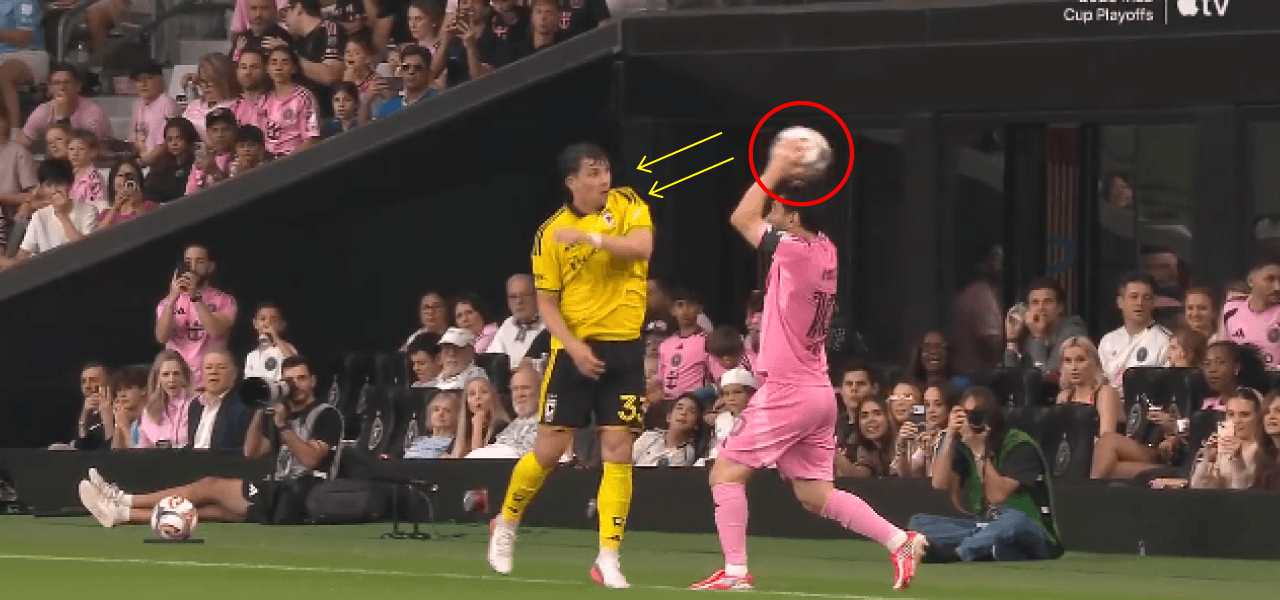
Inter Miami’s 3–0 loss to the Columbus Crew in Game 1 of the 2026 Major League Soccer (MLS) Cup Playoffs turned a routine sideline restart into a league-wide officiating controversy. With the defending champions already reduced to 10 men and trailing 1–0 at Nu Stadium, Lionel Messi launched a first-half stoppage-time throw-in that struck Columbus forward Gonzalo Tapia in the face.
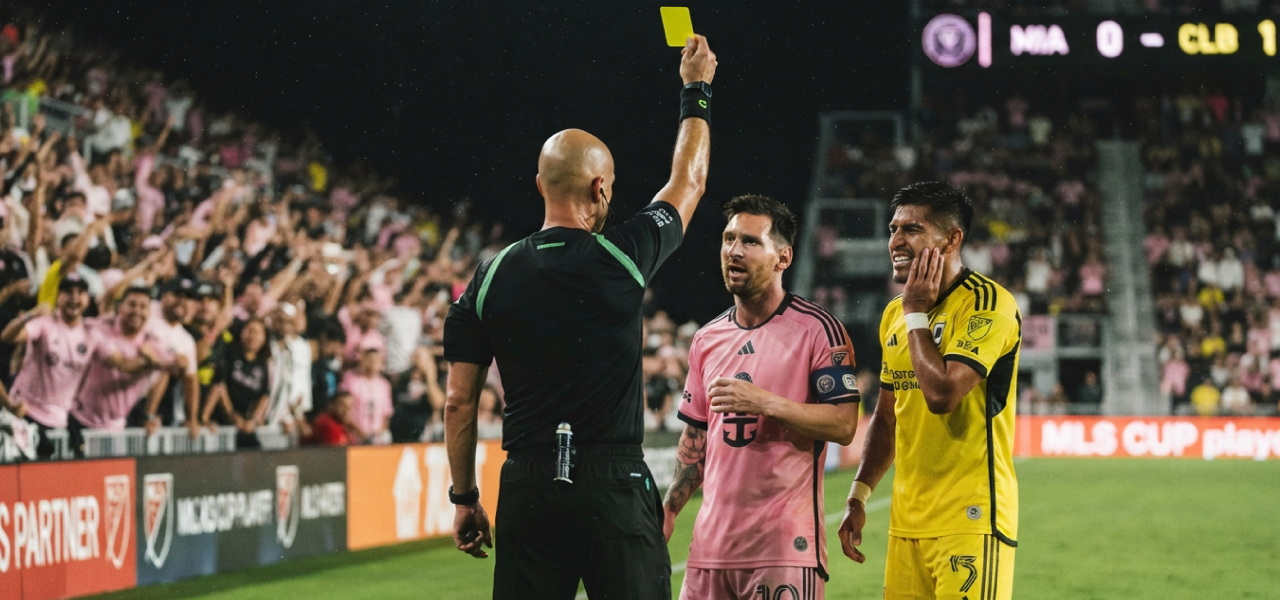
Referee Allen Chapman issued yellow cards to both players, a decision that drew immediate criticism from Columbus head coach Laurent Courtois.
“Everybody knows that he deserved more than a yellow card,” Courtois said post-match. “It’s just really sad.”
The match itself continued its downward spiral for Miami: Taha Habroune’s second‑half strike widened the gap, and Tapia added his second goal of the night. Beyond the scoreline, however, the incident has become an immediate litmus test for MLS disciplinary standards and competitive credibility.
Chapman stood by his decision after the match, telling reporters, “The force used was negligible and the offense did not reach the level of violent conduct.”
The MLS Rulebook Put to the Test
Under IFAB and MLS disciplinary guidelines, violent conduct includes deliberately striking an opponent with a thrown ball using excessive force, an offense that warrants a straight red card. The referee must assess both intent and the amount of force applied. By deeming the contact "negligible," Chapman placed Messi's reaction below the threshold for violent conduct, opting to caution Messi for unsporting behavior and Tapia for obstructing the restart.
The flashpoint highlights a gray zone referees worldwide wrestle with: when does a moment of frustration cross into punishable aggression? Those stakes multiply when the player involved is Lionel Messi, whose every on-field gesture is scrutinized and magnified by fans, broadcasters, and media across Europe, South America, and North America.
Advertisements
Superstar Marketability vs. League Credibility
Since Messi’s arrival in 2023 sparked unprecedented commercial growth, global broadcast reach, and the opening of Inter Miami's permanent home at Nu Stadium in 2026, MLS has worked to shed its old reputation and cement itself as a premier global competition. With 30 clubs now competing across North America, long-term credibility depends on the perception that rules are enforced impartially.
When a global icon avoids a red card on a borderline play, critics argue it fuels the narrative that MLS bends for marquee names. Maintaining trust with sponsors, broadcasters, and a growing domestic fanbase requires demonstrating that accountability applies equally, whether to an academy graduate or an eight-time Ballon d'Or winner.
The League’s Response and What It Means
In the immediate aftermath of Saturday night’s match, the league has yet to issue any supplemental discipline, leaving Chapman’s on-field caution and post-match explanation as the official ruling for now. Under standard postseason procedure, all major flashpoints automatically go before the MLS Disciplinary Committee for review ahead of the next round of fixtures.
That routine review now doubles as a high-profile test of MLS’s willingness to self-audit.
- If the panel intervenes retroactively: Issuing a fine or suspension would send an unmistakable message that even the sport’s most celebrated star is not above the rulebook, though overturning a referee's on-field judgment of "negligible force" sets a high procedural bar.
- If the yellow-card ruling stands: League officials will face pressure to clearly articulate why the play fell short of violent conduct under existing guidelines, lest silence be interpreted as protecting their biggest marquee attraction.
What Happens Next in the Inter Miami vs. Columbus Crew Series?
A single disciplinary decision in a high-stakes playoff can echo far beyond 90 minutes, touching the core of MLS’s competitive identity as it looks to stand on equal footing with top leagues worldwide. How the league handles the fallout in the coming days could shape fan trust and public perception heading into the decisive stretch of the postseason.
For now, the spotlight shifts back to the pitch. Barring supplemental discipline from the committee, Messi remains eligible as the best-of-three Round One series moves to Ohio. The Columbus Crew will host Game 2 on Friday, November 27, looking to eliminate the defending champions on home turf, while Inter Miami must regroup quickly to keep its title defense alive.
Advertisements
About the Author

@efe
🌈 Embracing the artistry of life as the favored one. I cherish creativity and aim to inspire others to explore new ideas. Let's embark on this journey together