Hidden Facts of Life
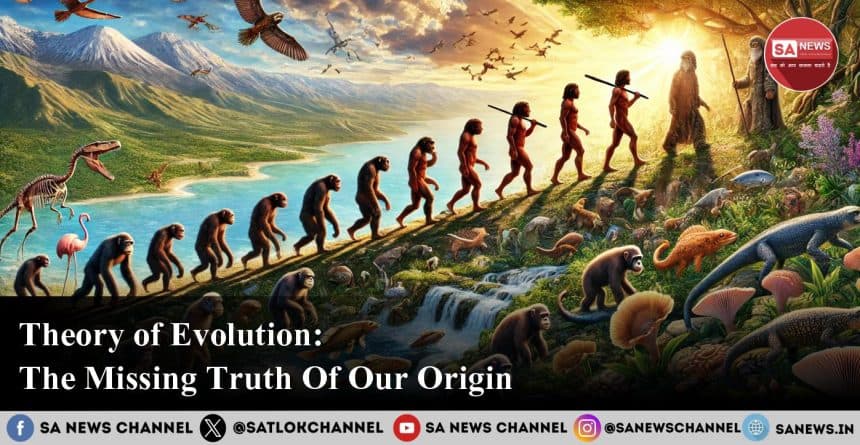
Hi everyone. In this article, we are going to discuss Evolution as a whole. The formation of complex organisms through gradual change from simple ancestral types over the course of geological time is termed evolution or organic evolution. Organisms that exist today have gradually evolved from much simpler ancestral forms, all originating from a common ancestor. Organic evolution can be defined as the total of adaptive changes in pre-existing forms that have taken place over long periods of time, resulting in diversity in form, structure, and function among organisms.
Many of you may already know that over 3.5 billion years ago, Earth was a hot, hostile planet. Yet, within its oceans, the first spark of life appeared—simple, single-celled organisms like bacteria. How did this happen? Scientists believe life started through a process called abiogenesis. Abiogenesis is a scientific theory which states that life arose on Earth through spontaneous natural processes due to conditions present at the time. In other words, life came from non-living matter. Shocking, right? That we came from non-living things! While there is still some reasonable explanation behind it, abiogenesis has neither been proved nor disproved. It is often compared to the archaic theory of spontaneous generation, but the two ideas are different. The archaic theory suggested that complex life (like maggots or mice) could arise spontaneously and continually from non-living matter.
Moving on, we know that oxygen is essential for survival. However, for more than 2 billion years after Earth's formation, free oxygen (O₂) was almost non-existent at the Earth's surface, and the oceans were predominantly iron-rich. Oxygen did not begin to accumulate in the atmosphere until 2.4–2.1 billion years ago—a time known as the Great Oxidation Event. During this period, atmospheric oxygen concentrations rose to about 1–10% of today’s levels. This life-changing transformation was driven by early microbes that evolved the ability to perform photosynthesis. These microbes produced oxygen, transforming Earth's atmosphere and paving the way for more complex life forms.
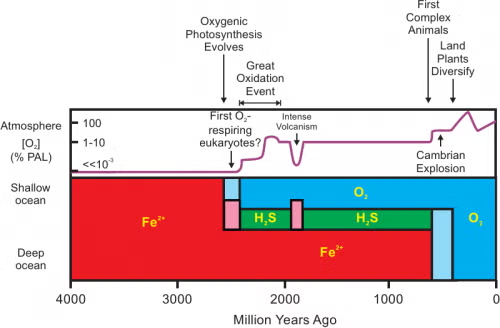
Approximately 600 million years ago, cells began working together, forming multicellular organisms. This “teamwork” allowed life to become larger and more complex. The Cambrian Explosion, which occurred about 540 million years ago, marked a burst of life, introducing the first recognizable animals. Interestingly, this event may have been triggered by even a small increase in oxygen levels in Earth’s atmosphere and shallow ocean waters.
As life continued to evolve, it began to conquer land. Plants were the pioneers, turning barren landscapes green. Through various morphological and physiological changes, plants successfully adapted to life on land, laying the foundation for terrestrial ecosystems. Soon after, arthropods—the first animals to step onto land—emerged, followed by vertebrates like early fish and amphibians. Over time, reptiles, dinosaurs, and mammals appeared, adapting to a wide range of environments and climates.
https://www.youtube.com/watch?v=AkqK2jdbduQ
Fast-forward to just a few million years ago, primates evolved into early humans. Our brains grew larger, we developed tools, and we learned to survive against all odds. From Homo habilis to Homo sapiens, humans became Earth’s most dominant species—though this story deserves an article of its own!
It’s important to note that evolution is a slow process, often taking millions of years to bring about significant changes. While some may doubt the theory of evolution, there is strong evidence to support it. For example, fossil records provide a timeline of gradual changes in organisms over time. Additionally, comparative anatomy reveals similarities among species, suggesting shared ancestry, while modern genetics confirms these connections through DNA analysis.
In conclusion, the story of life is one of resilience and constant change. From microscopic beginnings to the vast diversity of plants, animals, and humans today, every living thing shares a common evolutionary thread. Who knows what life will look like millions of years from now? The journey of evolution is far from over, and the next chapter has yet to unfold.
About the Author

@kuser7greug4q
I love to inspire souls and believe that problems were made to be solved.